How to Build and Manage a Compliance Framework with DBOMS
Introduction
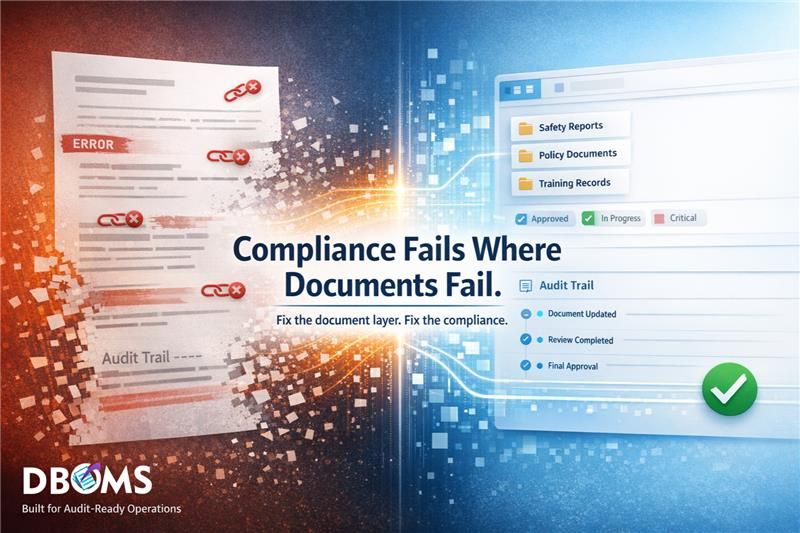
Compliance today is not about maintaining documents — it is about control, traceability, and real-time visibility.
Organizations fail compliance not because they lack knowledge of regulations, but because:
- Documents are scattered across systems
- Approvals depend on manual intervention
- Evidence is not traceable
- Audit preparation is reactive
This creates a system where compliance exists only on paper — not in operations.
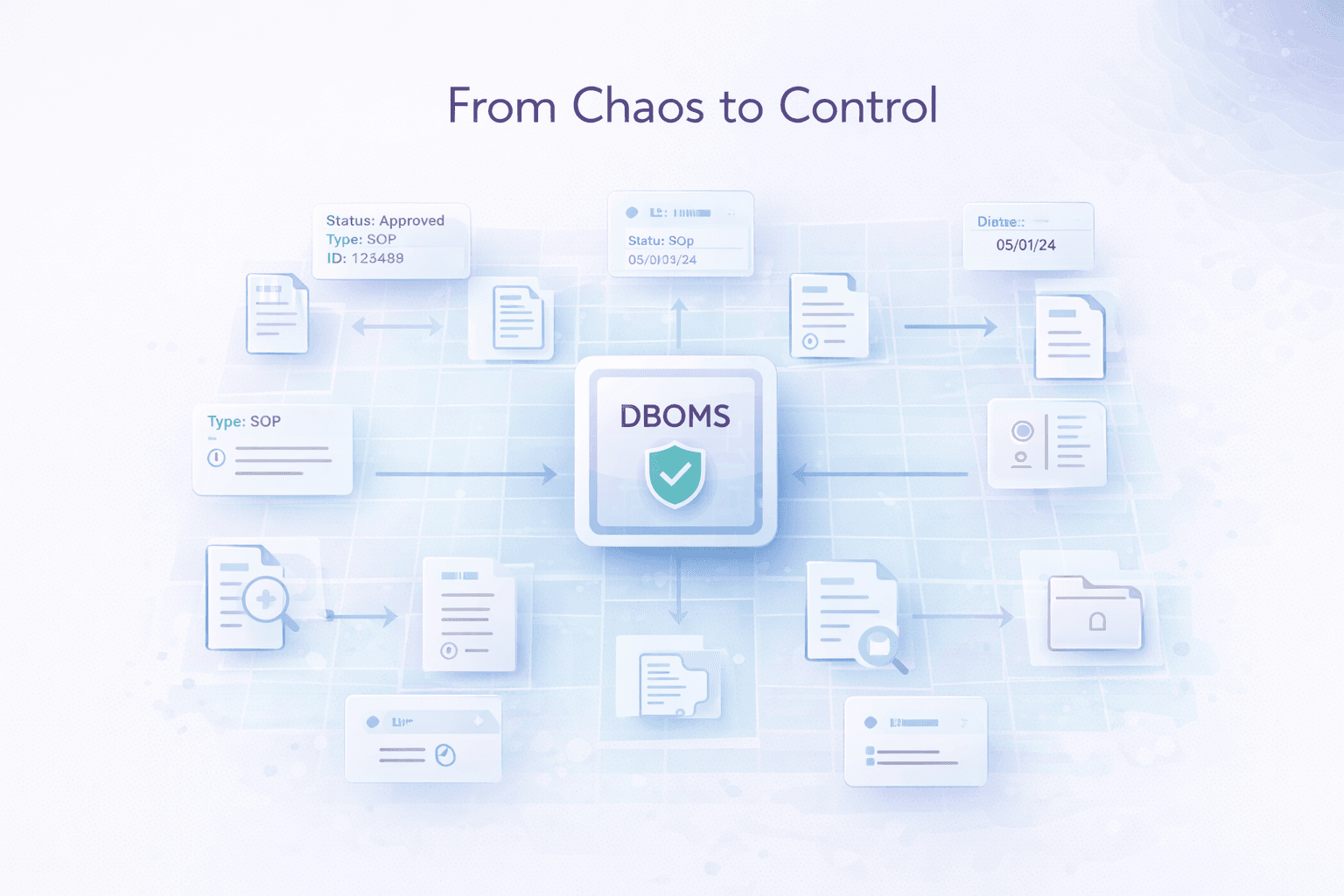
This is where DBOMS (Digital Back Office Management System) transforms compliance into a structured, system-driven process.
What is a Compliance Framework?
A compliance framework is a structured system that defines:
- Policies and procedures
- Required documents
- Approval workflows
- Audit checkpoints
- Regulatory mappings
Industry Examples
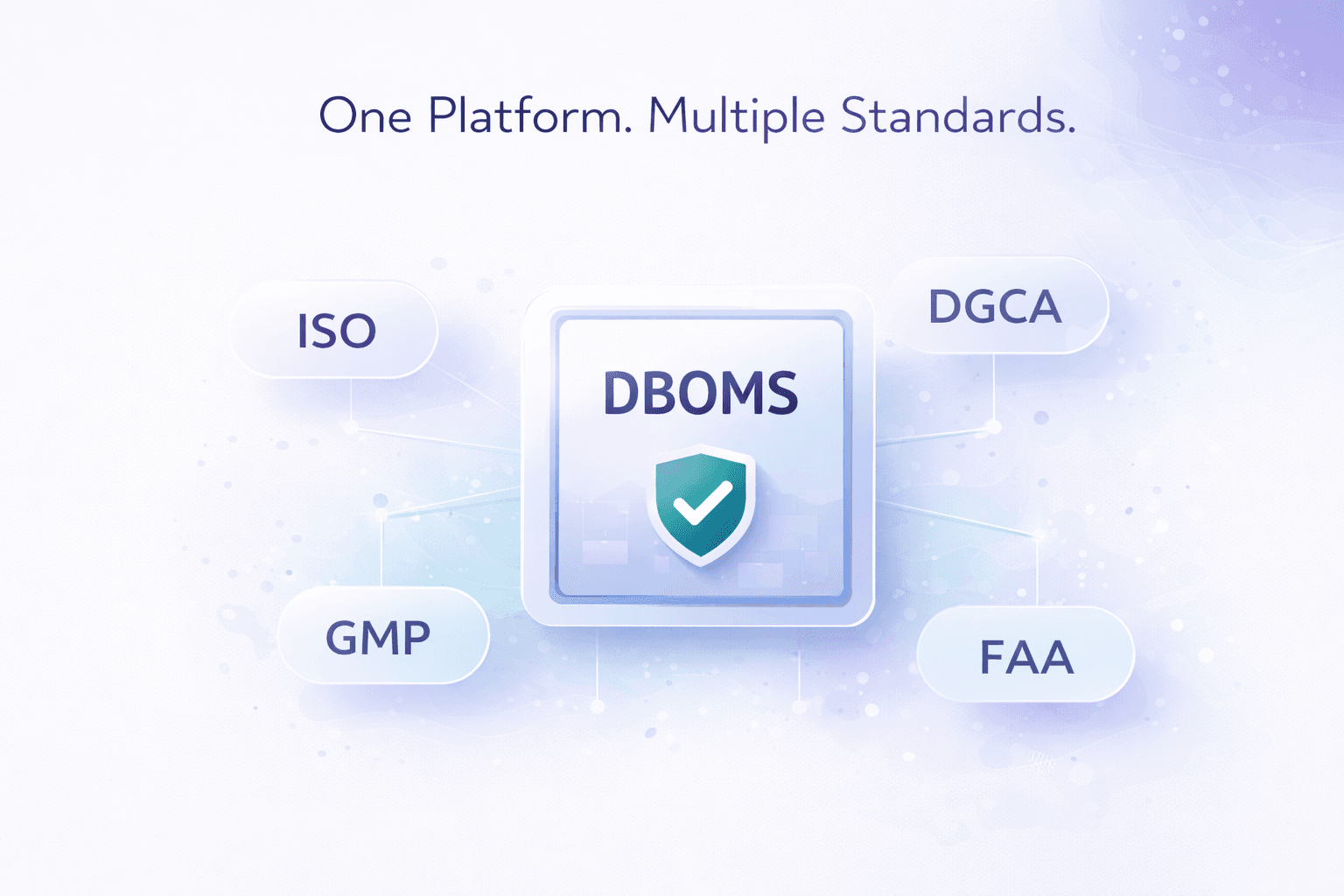
- Aviation → DGCA, EASA, FAA
- Pharma → FDA 21 CFR Part 11, GMP
- Manufacturing → ISO 9001, ISO 27001
However, defining a framework is easy. Managing it efficiently at scale is the real challenge.
Why Traditional Compliance Fails
❌ Common Problems
- Files stored in folders, emails, and shared drives
- No version control
- Manual approval dependency
- No real-time tracking
- Last-minute audit preparation
🚨 Impact
- Delayed audits
- Compliance gaps
- Financial penalties
- Operational risks
Traditional systems are document-driven Modern compliance must be system-driven
How DBOMS Solves Compliance at Scale
DBOMS is not just a document management system — it is a compliance execution engine.
1. Structured Compliance Design (Micro-Framework Architecture)
DBOMS enables organizations to build:
- Department-level frameworks
- Process-level compliance structures
- Modular compliance units (micro-frameworks)
This ensures flexibility and scalability across operations.
2. Centralized Document Control with Versioning
Every document in DBOMS is:
- Version controlled
- Time-stamped
- Fully traceable
No confusion about approvals or document versions.
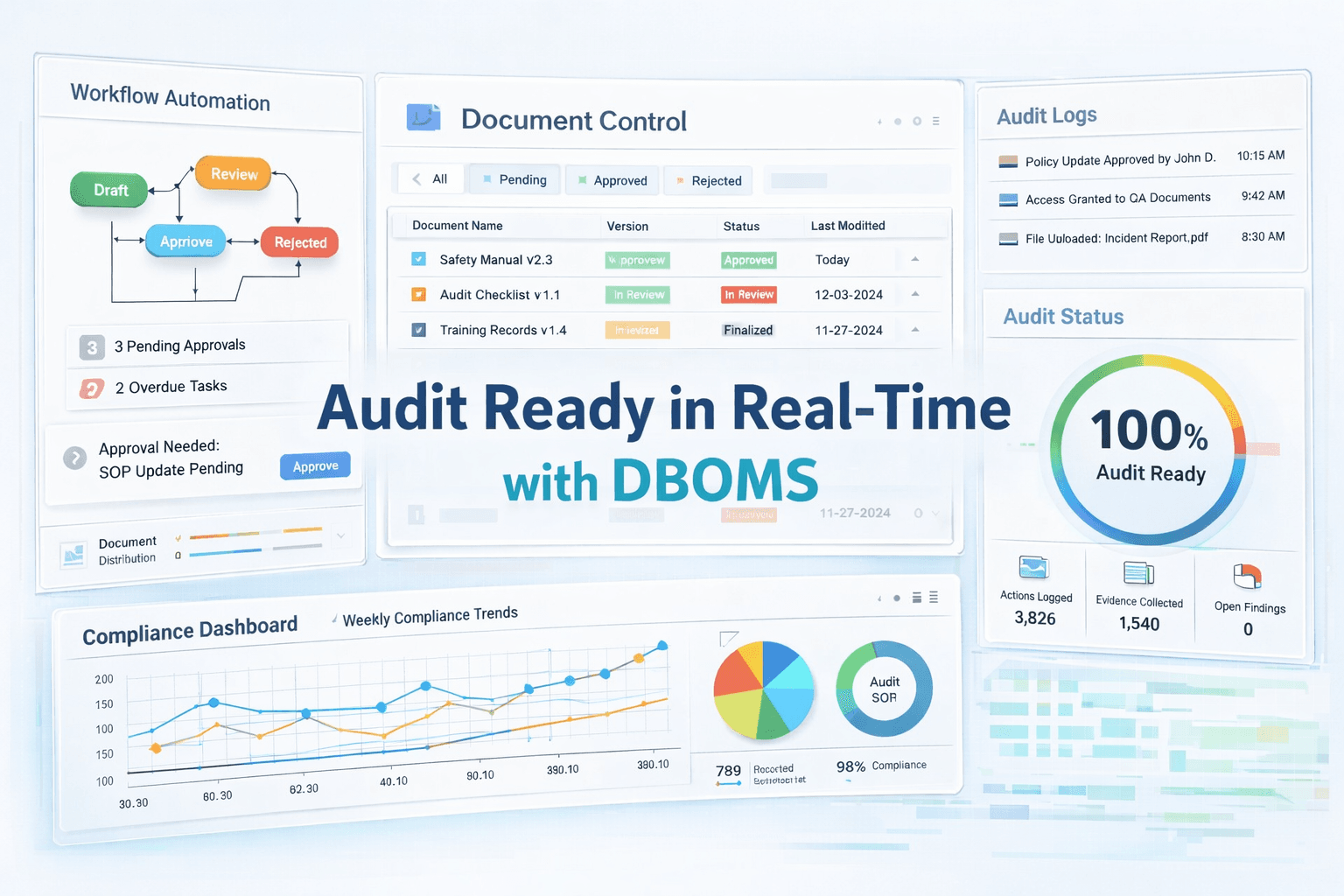
3. Workflow Automation
Define:
- Approval hierarchies
- Status flows (Draft → Reviewed → Approved → Rejected)
- Automated notifications
Compliance moves automatically without manual follow-ups.
4. Real-Time Audit Readiness
With DBOMS:
- Every action is logged
- Every approval is tracked
- Every document is instantly accessible
Audit readiness becomes continuous, not reactive.
5. Role-Based Access Control (RBAC)
Control:
- Who can view
- Who can edit
- Who can approve
Ensures security, accountability, and compliance enforcement.
6. Evidence-Based Compliance
Each compliance requirement is backed by:
- Documents
- Approval logs
- Timestamped records
You don’t just claim compliance — you prove it.
DBOMS vs Traditional Systems
| Feature | Traditional Systems | DBOMS |
|---|---|---|
| Document Storage | Scattered | Centralized |
| Version Control | Manual / Missing | Automatic |
| Workflow | Manual | Automated |
| Audit Readiness | Reactive | Real-time |
| Traceability | Limited | Full |
| Compliance Mapping | Static | Dynamic |
Industry Use Case: Aviation Compliance
Without DBOMS:
- Scattered technical logs
- Manual approvals
- Audit delays
With DBOMS:
- Real-time validation
- Structured workflows
- Instant audit access
Why DBOMS is the Future of Compliance
DBOMS transforms compliance from:
- Document-based → System-based
- Reactive → Proactive
- Manual → Automated
- Risk-prone → Audit-ready
Conclusion
Compliance frameworks fail when they depend on people. They succeed when they are system-driven.
DBOMS enables organizations to:
- Design compliance frameworks
- Automate workflows
- Maintain audit readiness
- Ensure full traceability
All in one unified platform.