Why Excel Based Compliance is a Time Bomb
Introduction
Excel is widely used across industries for compliance tracking.
It is flexible, easy to use, and quickly deployable.
But as compliance complexity increases, Excel becomes a hidden risk.
What starts as a simple tracking tool gradually turns into a fragile system — one that cannot scale, cannot validate, and cannot prove compliance.
Industry Reality: Excel as a Default System
In aviation, oil & gas, pharma, and manufacturing, Excel is often used for:
- Compliance tracking (ADs, SBs, regulatory checklists)
- Audit preparation
- Document validation logs
- Maintenance and inspection records
It becomes the central layer connecting multiple systems.
But Excel is not a system. It is a tool.
And tools do not enforce compliance.
Where Things Break
Excel-based compliance fails at structural levels.
1. No Data Integrity Control
- Anyone can edit data
- No enforced validation rules
- Errors remain undetected
2. Lack of Traceability
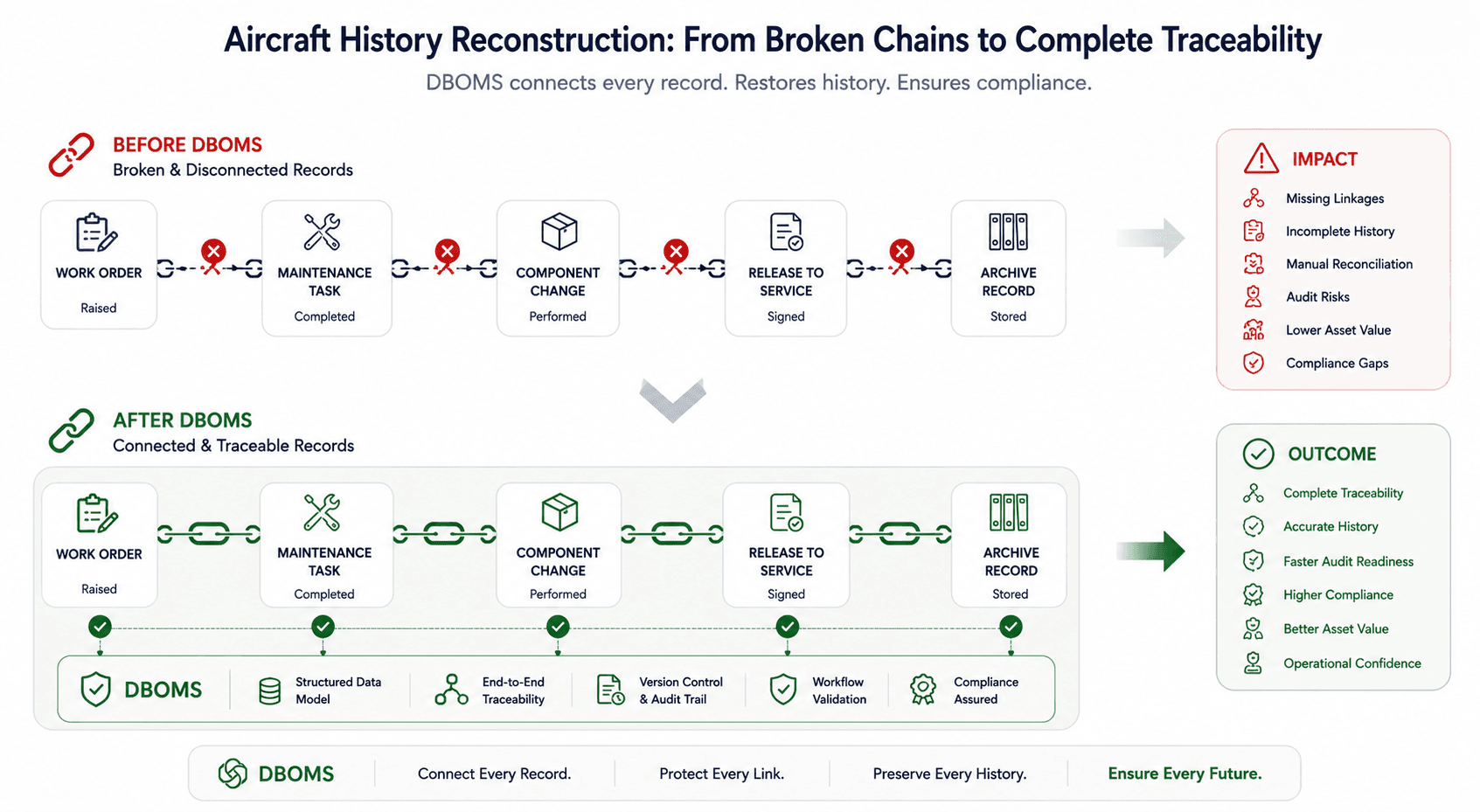
- No linkage between records
- No lifecycle tracking
- No audit trail
3. Version Confusion
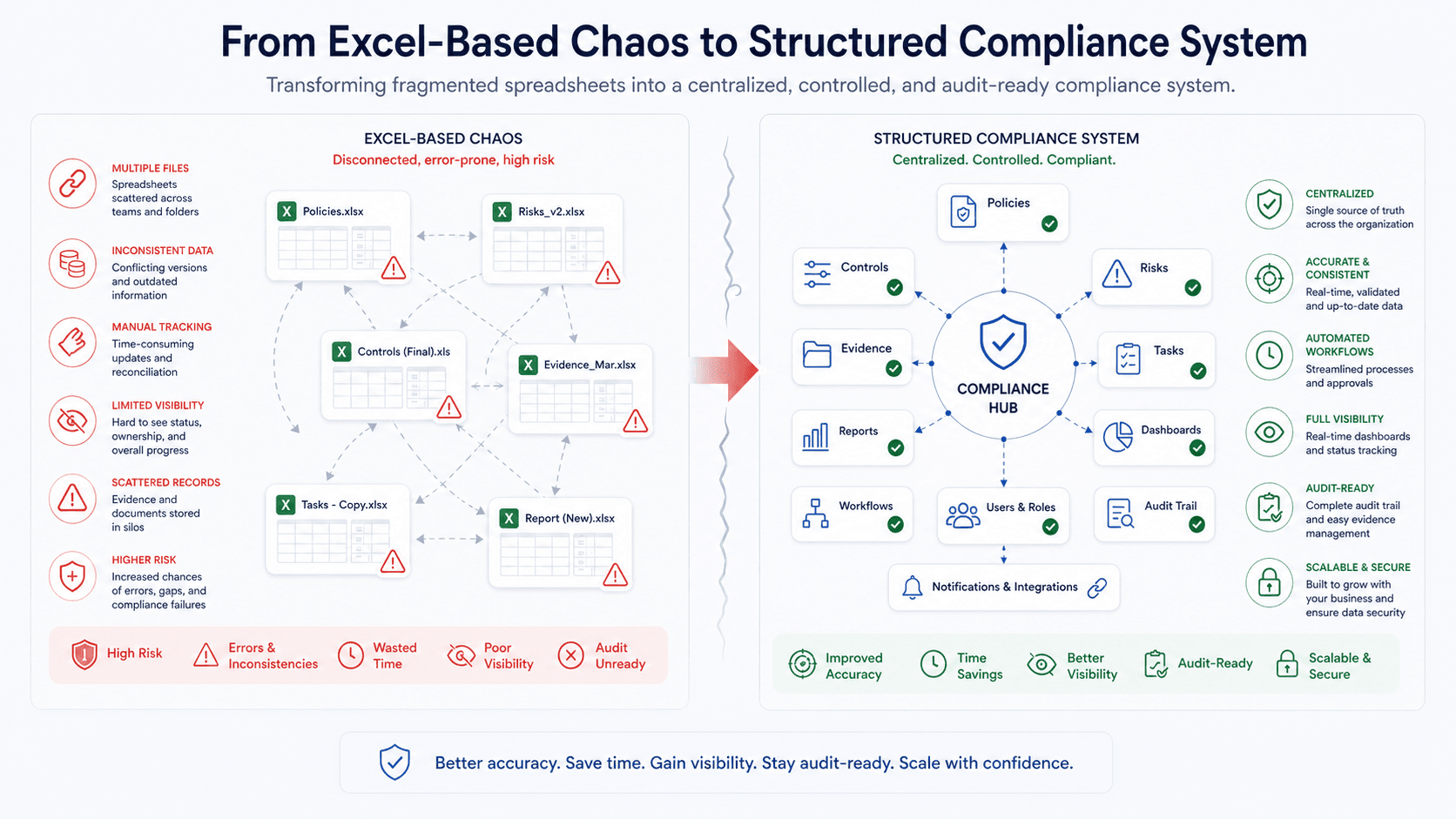
- Multiple files across teams
- No single source of truth
- Risk of outdated data usage
4. Manual Dependency
- Data entry is manual
- Validation is manual
- Reporting is manual
5. No Workflow Enforcement
- No approval hierarchy
- No status tracking
- No accountability
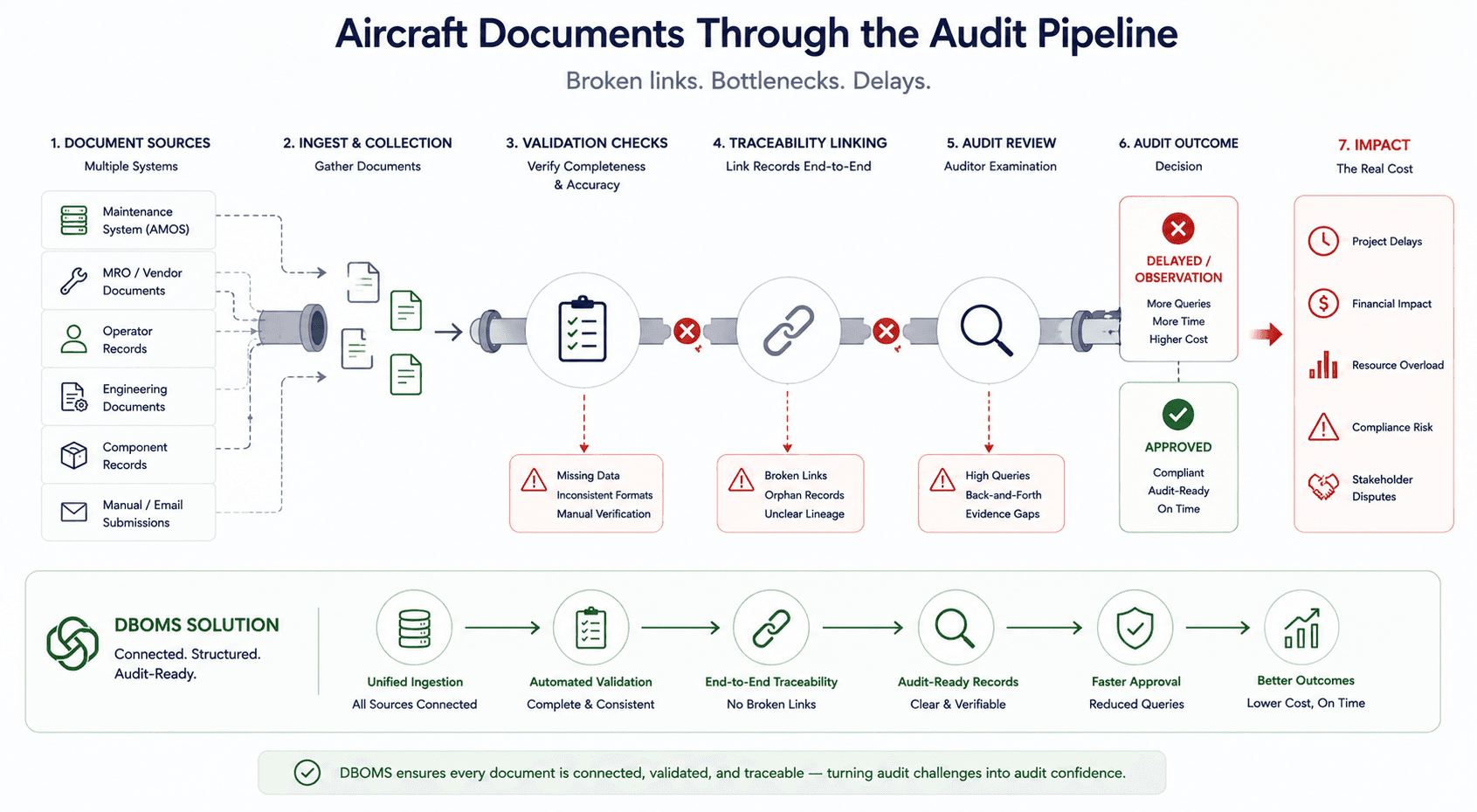
Real-World Scenario: Audit Preparation
During an audit:
- Teams rely on Excel trackers for compliance status
- Data is cross-checked with documents manually
- Missing or inconsistent entries create confusion
Typical issues:
- Mismatch between Excel and actual documents
- Missing updates
- Duplicate or outdated records
The audit becomes a verification challenge instead of a confirmation process.
Business Impact
Excel-driven compliance creates measurable risks:
- Audit Readiness
Increased preparation time and higher probability of findings
- Operational Efficiency
High manual workload and dependency on individuals
- Compliance Risk
Lack of traceability leads to non-conformance
- Data Reliability
Errors and inconsistencies reduce trust in data
- Scalability
Systems fail as data volume and complexity increase
Why Excel Fails as a Compliance System
Excel was not designed for compliance management.
It:
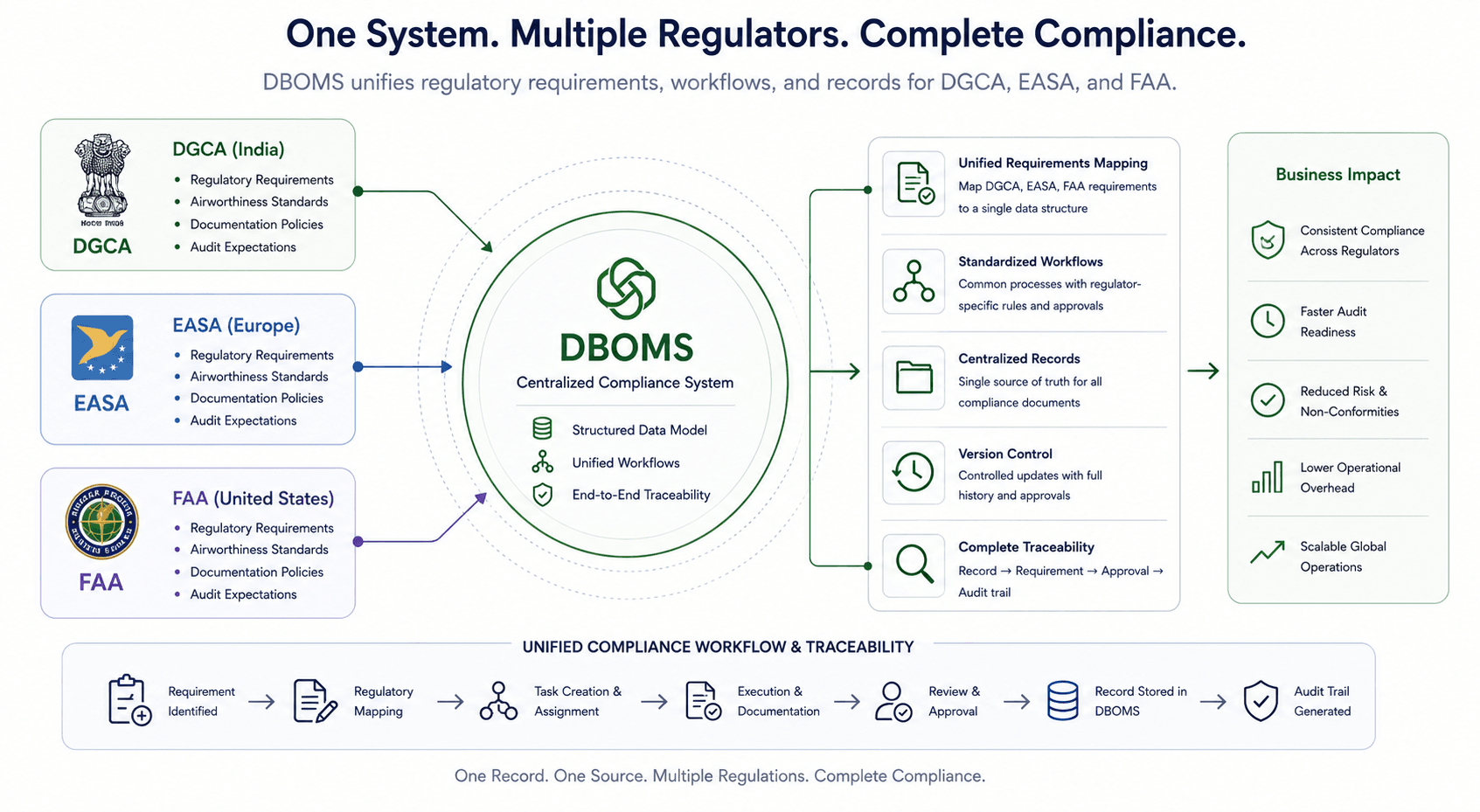
- Does not enforce structured data models
- Cannot maintain relationships between records
- Lacks real-time validation
- Provides no lifecycle visibility
- Cannot generate reliable audit trails
As compliance requirements grow, these limitations become critical.
DBOMS Approach: System-Driven Compliance
DBOMS replaces Excel dependency with structured record management.
Structured Data
- Records follow defined schemas
- Metadata is standardized
Workflow Automation
- Approval and validation processes are system-driven
- Status is tracked in real time
Traceability
- Records are interconnected
- Full audit trail is maintained
Version Control
- Single source of truth
- Controlled document revisions
Lifecycle Management
- Records move through defined states
- Compliance is embedded in workflows
Comparison: Excel vs DBOMS
- Data Structure
Excel-Based System: Unstructured DBOMS: Schema-driven
- Validation
Excel-Based System: Manual DBOMS: Automated
- Traceability
Excel-Based System: None DBOMS: System-driven
- Version Control
Excel-Based System: File-based DBOMS: Centralized
- Audit Readiness
Excel-Based System: Reactive DBOMS: Continuous
Strategic Advantage
Moving away from Excel enables:
- Faster audit preparation
- Reduced manual effort
- Improved data accuracy
- Real-time compliance visibility
- Scalable compliance operations
Organizations transition from fragile tracking to controlled systems.
Final Perspective
Excel does not fail immediately. It fails gradually — as complexity increases.
The risk builds silently:
- Data becomes unreliable
- Processes become inconsistent
- Compliance becomes difficult to prove
The solution is not better spreadsheets. It is better systems.
Organizations that move to structured, system-driven compliance eliminate hidden risks and build long-term operational control.