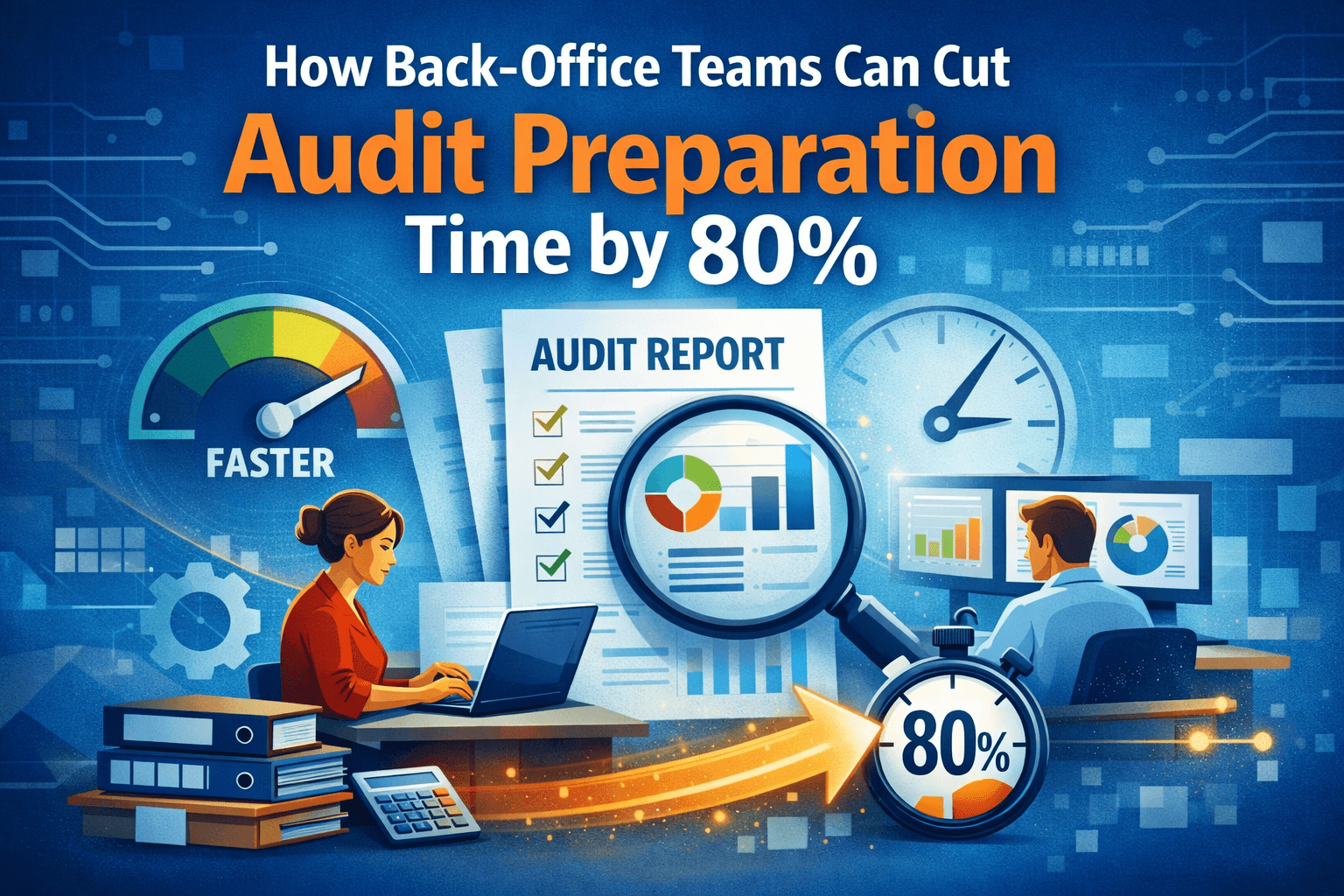
How Back-Office Teams Can Cut Audit Preparation Time by 80%
⏱️ Audit Week: The Most Stressful Week of the Year
Ask any back-office manager what the most stressful week of the year is — and they’ll say it without hesitation: audit week.
Spreadsheets open. Emails flying. File rooms overflowing. Everyone hunting for “the latest version” of a document that should’ve been easy to find.
Now imagine cutting that entire preparation effort by 80% — without hiring extra staff or extending work hours.
That’s what organizations using DBOMS (Digital Back Office Management System) are experiencing right now.
⏳ The Real Cost of Manual Audit Preparation
For most teams, audit preparation means working backwards — digging through shared folders, verifying approvals, and proving document authenticity.
Here’s where time (and sanity) is lost:
| Task | Average Time (Manual) | With DBOMS |
|---|---|---|
| Finding documents | 2–4 hours per department | Instant keyword search |
| Collecting approvals | 3–5 days | Auto-logged in workflow |
| Verifying document versions | 1–2 days | Automatic version control |
| Creating audit logs | Entire week | Generated in real time |
DBOMS doesn’t just save time — it eliminates repetitive work entirely.
⚙️ Why Back-Office Audits Take So Long
Traditional systems aren’t built for traceability. They rely on people — not structured processes — to maintain accuracy.
Common bottlenecks include:
- Files stored in personal drives or email threads
- Approvals scattered across departments
- Lack of version consistency
- No centralized audit trail
When an auditor asks, “Who approved this document?” … and no one can answer confidently — that’s where delays begin.
🧠 DBOMS: Making Audit-Readiness Automatic
DBOMS removes the guesswork by turning every daily action into an audit-ready record.
The system auto-links documents, approvals, and versions the moment they’re created — so you’re already prepared before the audit begins.
🗂️ 1. Real-Time Document Linking
Every file in DBOMS is connected to its relevant:
- Process
- Department
- Workflow stage
If an auditor wants to trace a record, DBOMS instantly shows:
- Where it originated
- Who approved it
- Which version is active
No file hunts — just one click to full context.
🔄 2. Automated Audit Trails
Audit trails are generated automatically — not manually compiled.
Every upload, edit, comment, and approval is logged with:
- Timestamp
- User ID
- Workflow stage
- Version reference
This creates a tamper-proof chain of accountability.
📜 3. Version Control and Instant Retrieval
Instead of guessing which file is final, DBOMS maintains complete version history.
Users can:
- Compare changes
- Roll back to older versions
- Download archived approvals
Auditors get confidence. Teams get control.
📊 4. Compliance Dashboards
DBOMS provides a real-time view of audit readiness, including:
- Pending approvals
- Expired certificates
- Incomplete workflows
- Department-level compliance health
Audits shift from “emergency mode” to a simple system review.
🏢 Real Results from DBOMS Users
| Industry | Problem | Time Saved |
|---|---|---|
| Manufacturing | Collecting inspection logs from multiple plants | 78% faster |
| Pharma | Compiling GMP audit trails manually | 82% faster |
| Aviation | Tracking maintenance approvals | 75% faster |
| BPO / IT | Mapping compliance documentation | 80% faster |
On average, organizations reduce audit preparation from 5 days to under 1 day.
💡 The Secret: Audit by Design, Not by Deadline
Most companies prepare for audits once a year.
DBOMS users are always audit-ready because their systems capture compliance data continuously — not just during audit season.
That’s the difference between chasing files and owning your process.
🚀 The 80% Advantage
With DBOMS, audit preparation becomes part of your daily workflow — not an extra workload.
You:
- Save time
- Reduce errors
- Improve accountability
- Gain full compliance visibility
What used to take a week now fits into an afternoon.
That’s not just efficiency. That’s structured digital transformation.