You Don’t Need More Data — You Need Better Structure
Introduction
Most organizations believe their problem is lack of data.
They invest in collecting more:
- More documents
- More reports
- More logs
- More systems
But the real issue is not volume.
It is structure.
Without structure, data becomes difficult to use, verify, and trust — especially in compliance-driven industries.
Industry Reality: Data Everywhere, Clarity Nowhere
Across aviation, oil & gas, pharma, and manufacturing:
- Data is continuously generated
- Documents are regularly updated
- Systems are actively used
Yet, organizations struggle with:
- Finding the right information quickly
- Proving compliance during audits
- Maintaining consistency across records
The problem is not missing data. It is disconnected data.
Where Things Break
Unstructured data creates systemic inefficiencies.
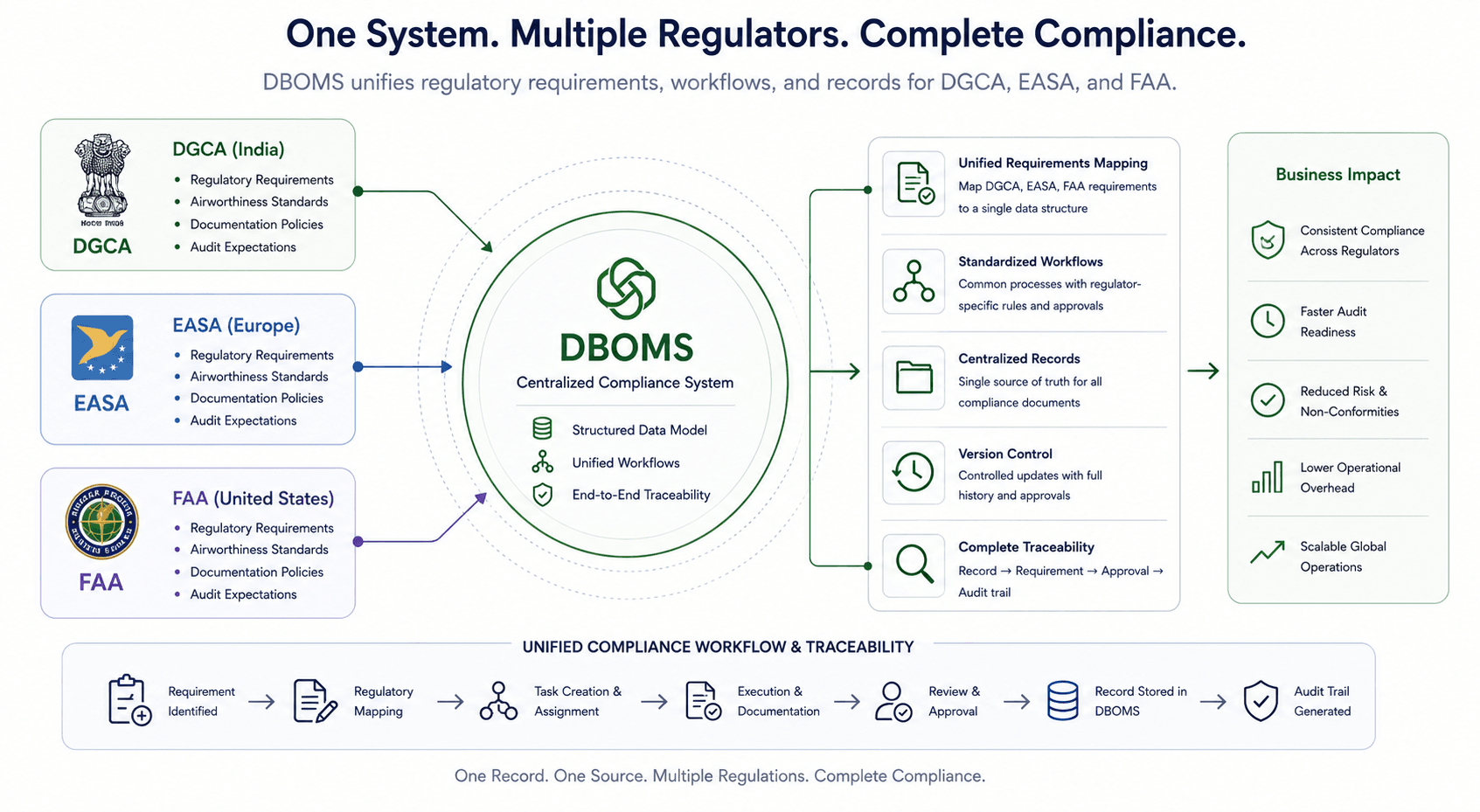
1. No Standardized Data Model
- Data is stored in different formats
- Metadata is inconsistent
- No uniform structure exists
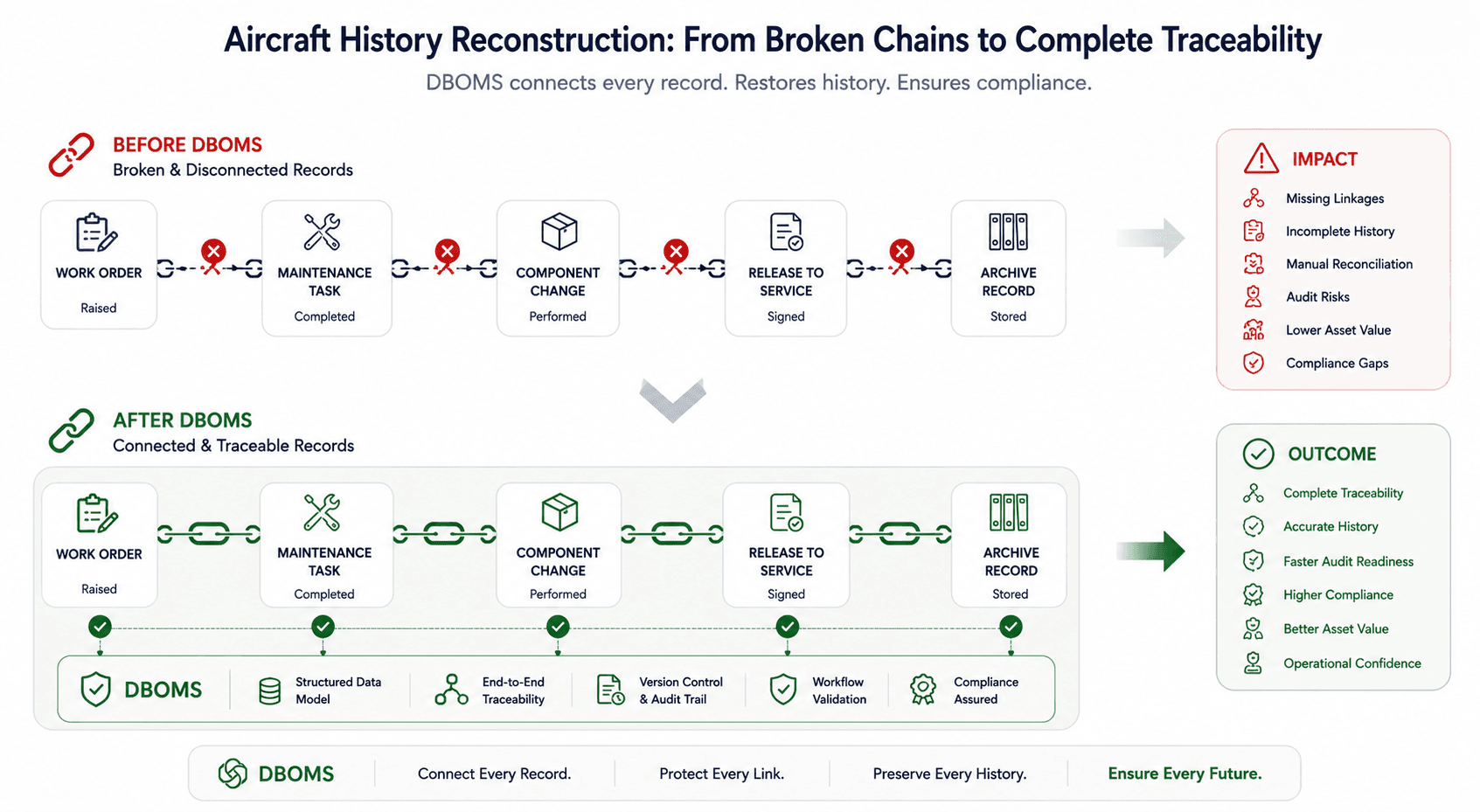
2. Lack of Relationships
- Documents are isolated
- No linkage between records
- Context is lost
3. Poor Traceability
- No clear lifecycle tracking
- Difficult to verify history
- Audit trails are incomplete
4. Version Confusion
- Multiple copies of the same data
- No controlled updates
- Risk of outdated information
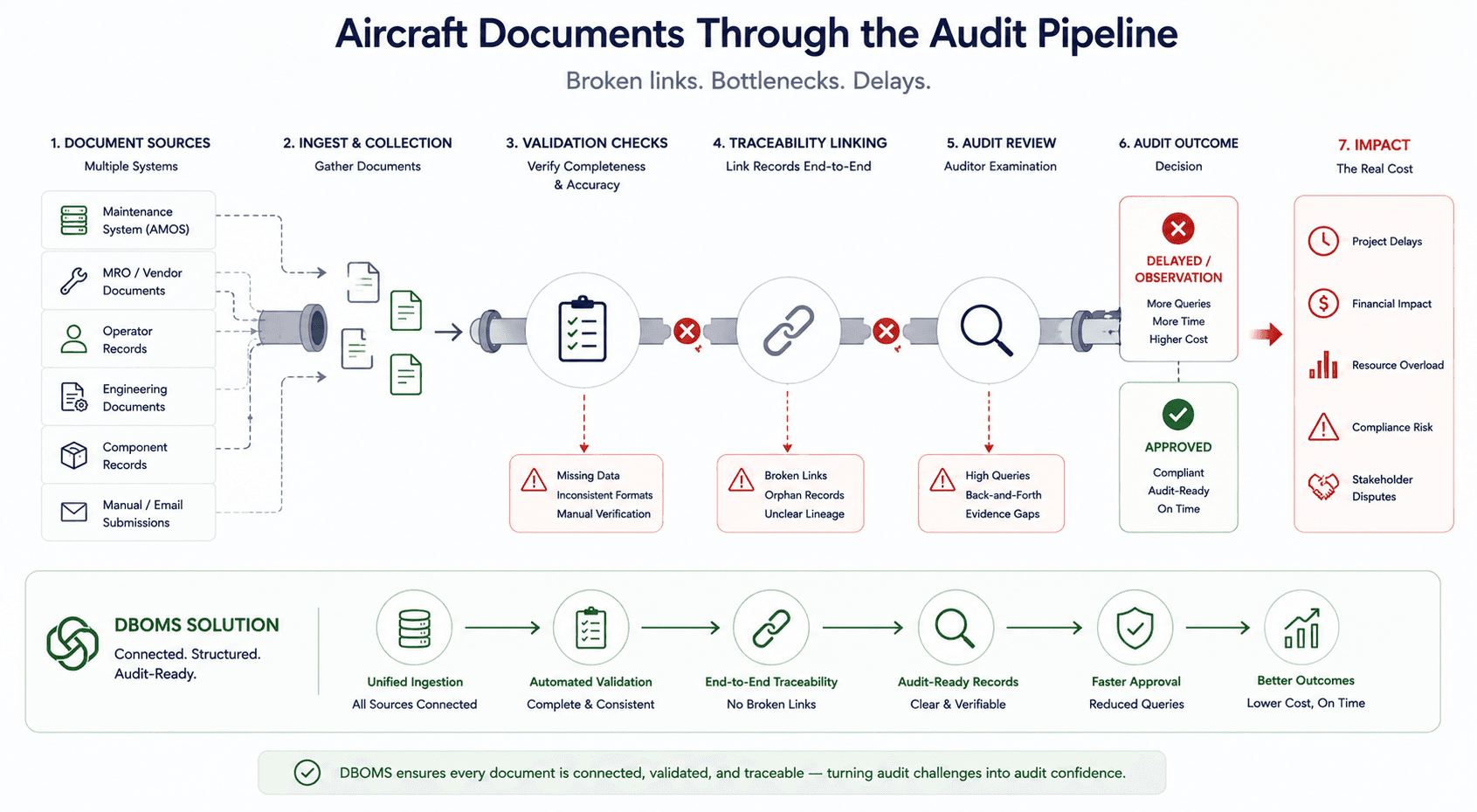
Real-World Scenario: Audit or Compliance Check
During an audit:
- Data must be verified across multiple sources
- Relationships between records must be proven
- History and approvals must be traceable
In practice:
- Teams search across systems
- Data is manually validated
- Missing links delay audits
The issue is not data availability. It is data usability.
Business Impact
Lack of structure directly affects performance:
- Decision Making
Incomplete or inconsistent data reduces confidence
- Audit Readiness
Increased preparation time and audit observations
- Operational Efficiency
High dependency on manual processes
- Compliance Risk
Inability to prove traceability
- Scalability
Systems fail as data volume grows
Why Traditional Approaches Fail
Most systems focus on storing data, not structuring it.
They:
- Treat data as independent entries
- Do not enforce relationships
- Lack lifecycle visibility
- Depend on manual validation
As complexity increases, these systems become inefficient.
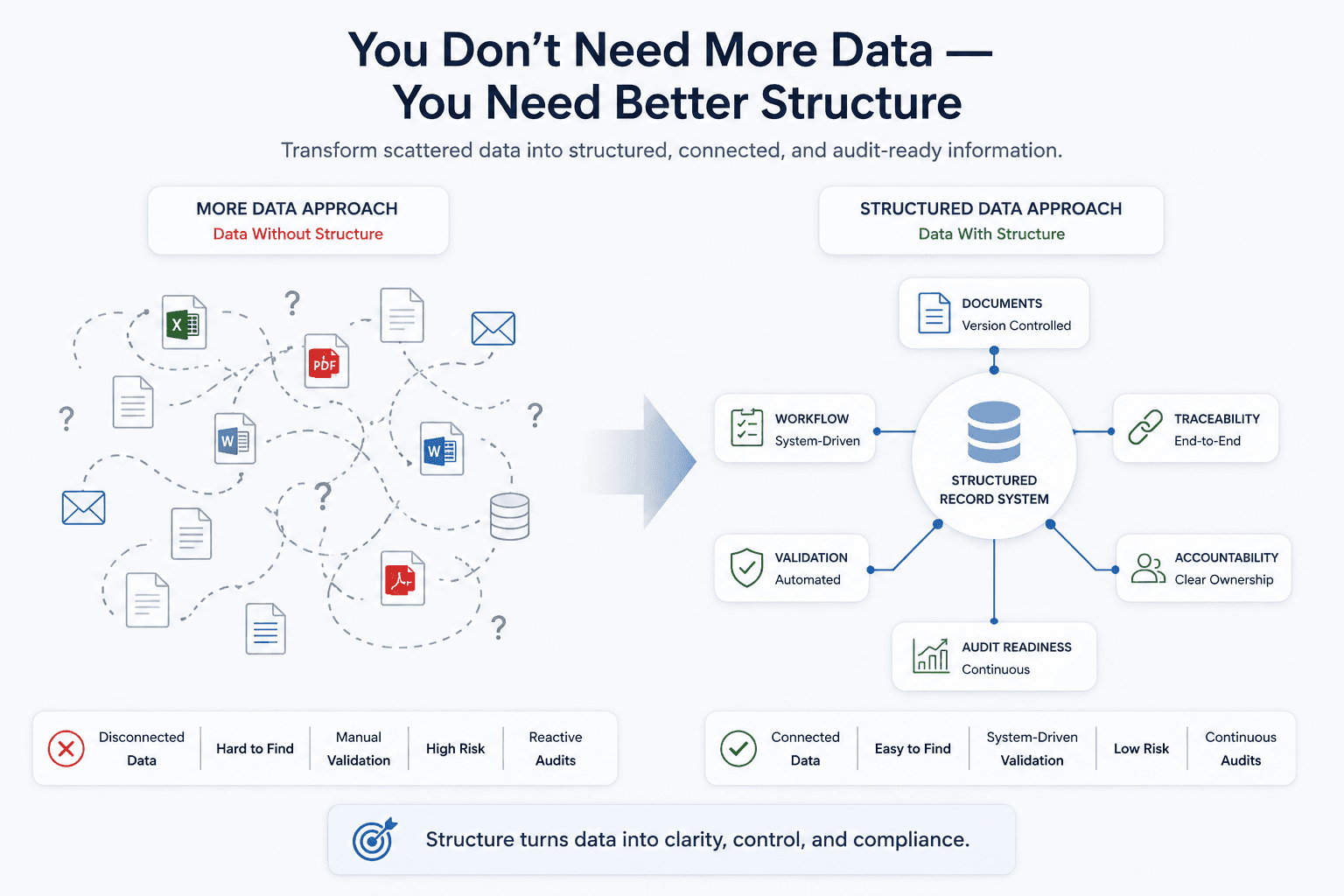
DBOMS Approach: Structure Over Volume
DBOMS focuses on organizing data into structured, connected records.
Structured Data Models
- Every record follows a defined schema
- Metadata is standardized
Workflow-Driven Processes
- Data moves through controlled workflows
- Validation is system-enforced
Connected Records
- Relationships between records are maintained
- Context is preserved
Version Control
- Single source of truth
- Controlled updates and history
Lifecycle Management
- Records follow defined stages
- Compliance is embedded
Comparison: Data Volume vs Data Structure
- Focus
More Data Approach: Quantity Structured Data Approach: Quality & structure
- Usability
More Data Approach: Low Structured Data Approach: High
- Traceability
More Data Approach: Limited Structured Data Approach: Complete
- Validation
More Data Approach: Manual Structured Data Approach: System-driven
- Audit Readiness
More Data Approach: Reactive Structured Data Approach: Continuous
Strategic Advantage
Organizations that focus on structure gain:
- Faster access to reliable data
- Improved audit readiness
- Reduced manual effort
- Better decision-making capability
- Scalable systems
Data becomes an asset, not a burden.
Final Perspective
More data does not solve complexity. It amplifies it.
Structure is what transforms data into value.
In compliance-driven environments, success depends on:
- How data is organized
- How it is connected
- How it is validated
The future is not about collecting more. It is about structuring better.
Organizations that recognize this shift will operate with clarity, control, and confidence.